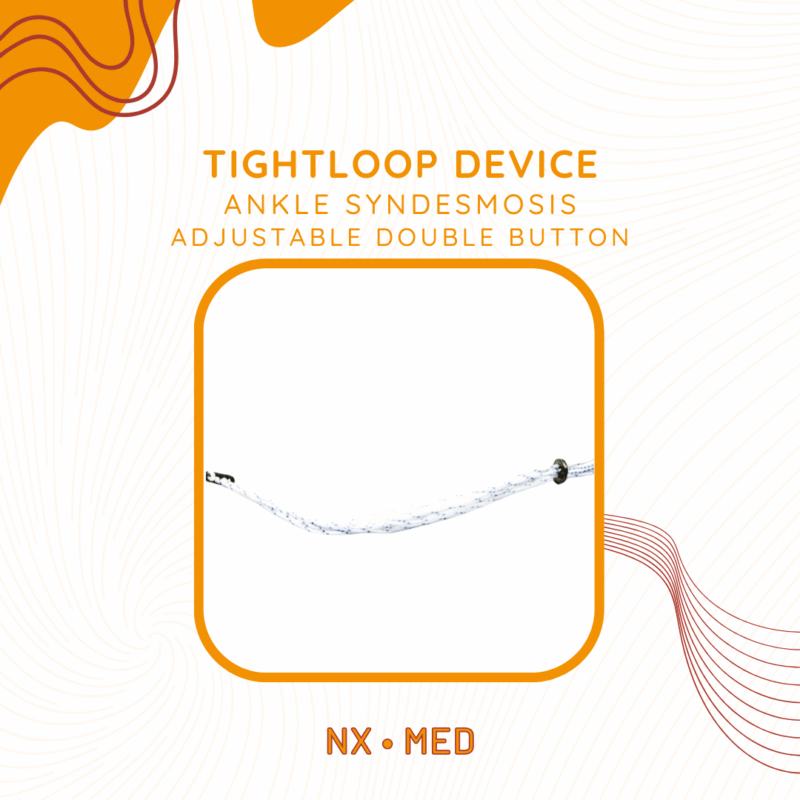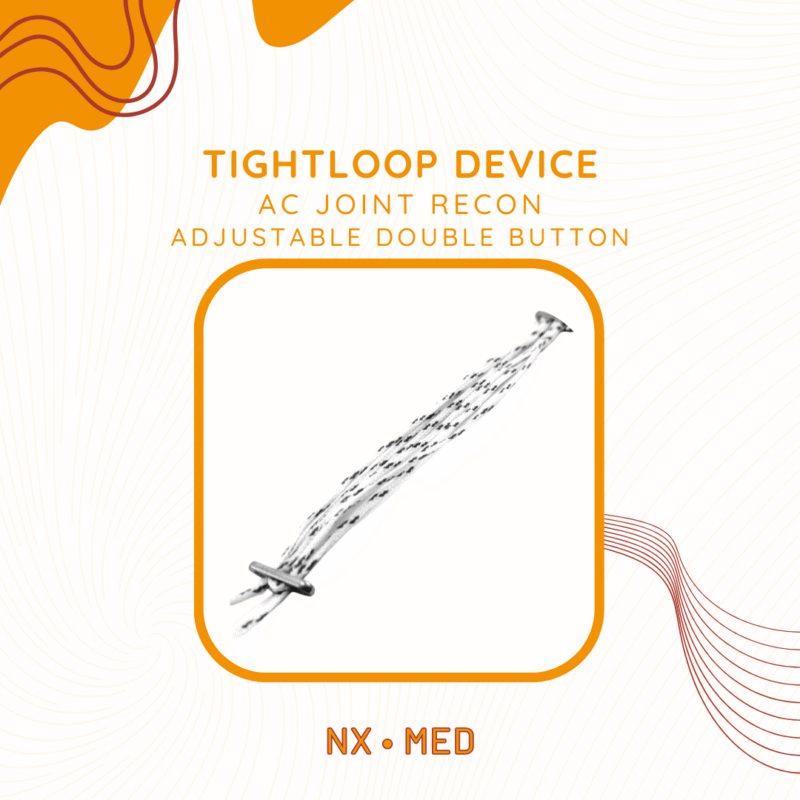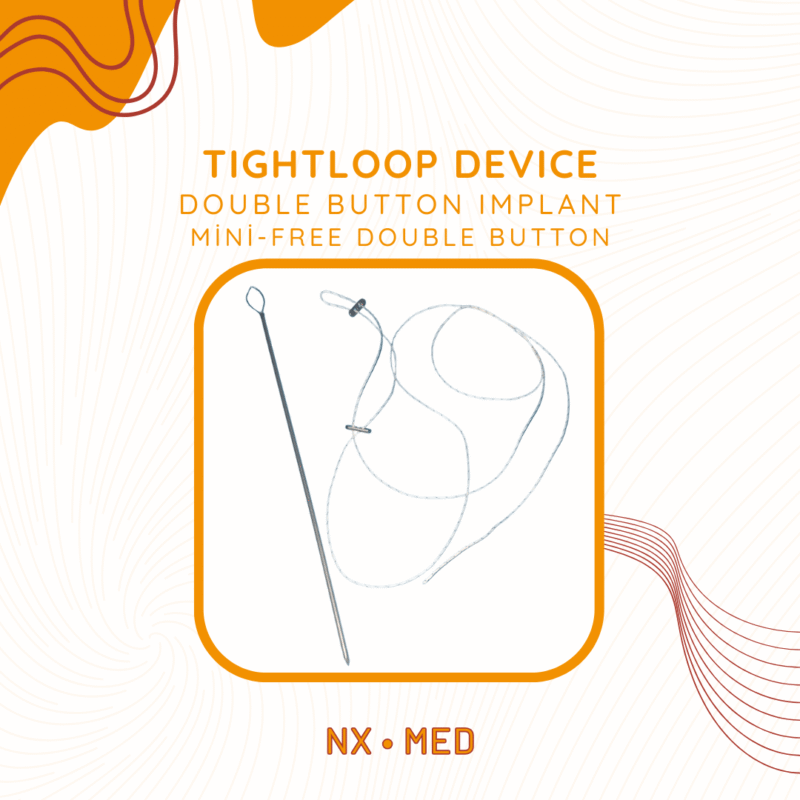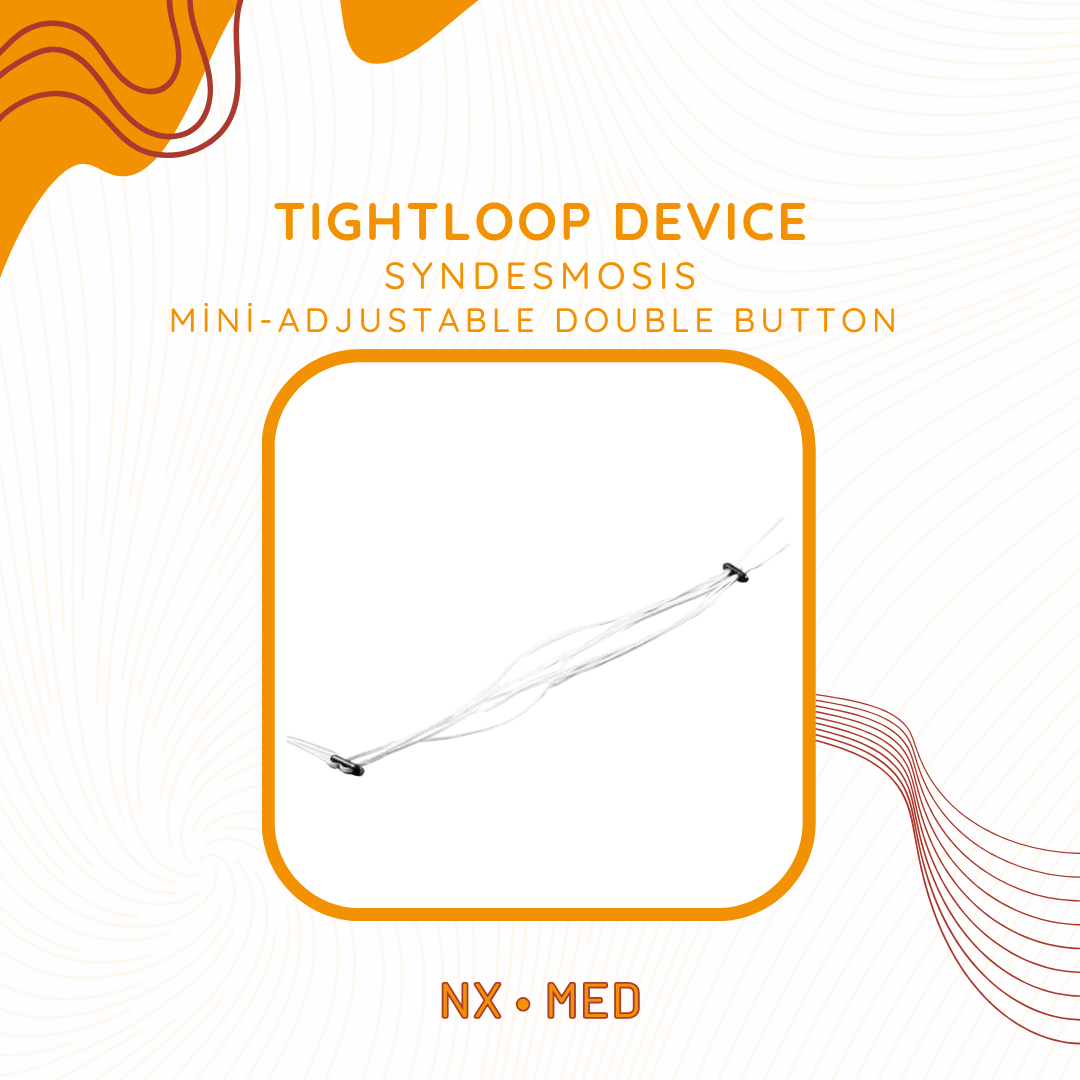
The Mini Double Button Implant provides stable cortical fixation for small bones requiring ligament reconstruction. It features two titanium buttons connected by a high-strength adjustable suture loop for stability. The implant passes through a small bone tunnel typically measuring around three millimeters in diameter. Buttons sit on opposite cortices and create secure compression for improved anatomical alignment and stabilization. This system replaces bulky plates or screws when traditional fixation methods become impractical in small anatomy.
Indications & Clinical Applications
The Mini Double Button Implant – Adjustable is ideally suited for:
- Reconstruction or stabilization of small bones and joints. (e.g., carpal bones, metacarpals, thumb base / CMC joint, small distal radius/ulna fragments).
- Ligament or soft-tissue stabilization (e.g., wrist ligament repair, radioulnar instability, CMC joint stabilization).
- Situations requiring minimally invasive hardware with minimal soft-tissue disruption. Especially in anatomically confined areas with limited soft tissue coverage.
Given its design, this implant is not intended for high-load, weight-bearing joints (like the hip or knee).
Why Surgeons Choose Mini Double Button Implant – Adjustable
- When space is limited — small bones, narrow anatomical corridors (wrist, thumb base, hand) — and conventional hardware is bulky or too invasive.
- For soft-tissue–friendly stabilization — low-profile buttons minimize soft-tissue irritation, hardware prominence, and post-operative discomfort.
- For intraoperative flexibility — adjustable loop allows fine-tuning compression or reduction, optimizing alignment and stability tailored to injury and patient anatomy.
- For improved imaging follow-up — titanium and suture materials offer favorable radiographic and MRI compatibility, aiding in postoperative assessment.
| Feature | Benefit |
|---|---|
| Titanium buttons | Low profile, less irritation |
| Adjustable suture loop | Precise tension control |
| Small bone tunnel | Minimally invasive placement |
| Dual-button support | Even load distribution |
| Imaging-friendly materials | Easy post-op assessment |